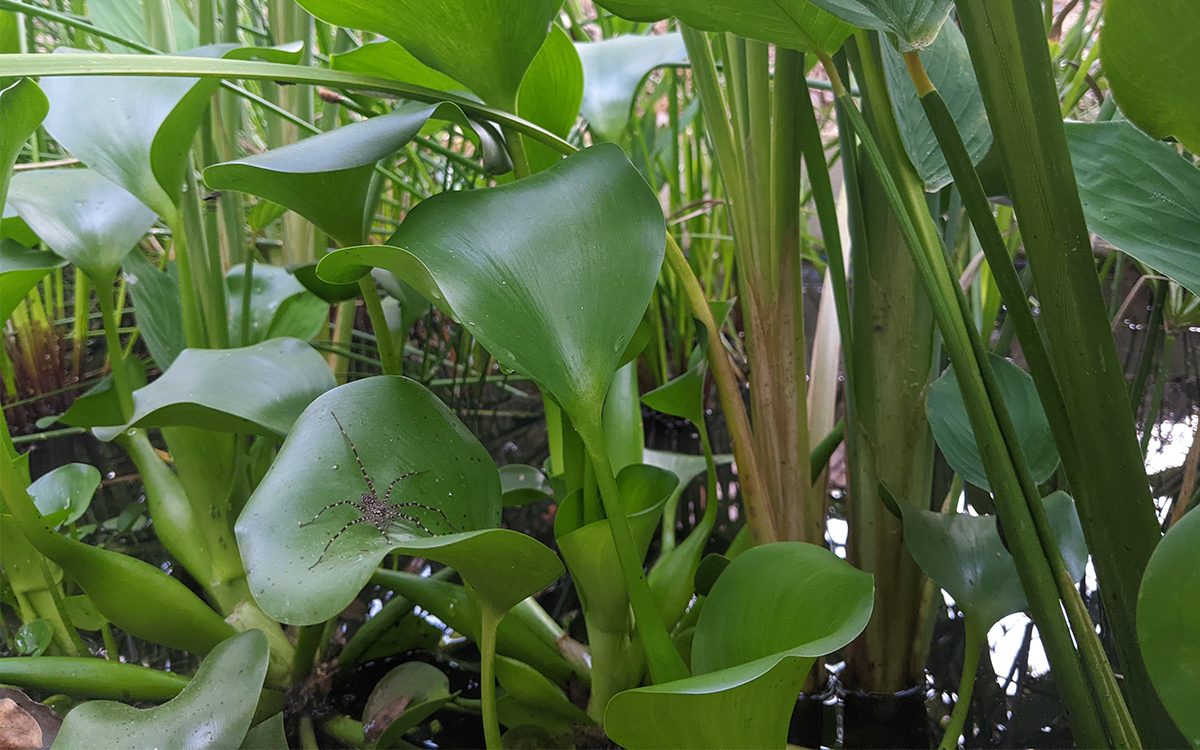
This text is to share my new experience with the artificial wetland I have at home, used as a secondary treatment system for blackwater and greywater. We implemented it in December 2021.
Commonly, in rural areas like the one where I live, a septic tank is used followed by a soak pit. This is a tank where solids are separated, and then the water travels to an underground space filled with stones where the liquid waste drains into the subsurface. Although this is permitted by regulations, it is not the most sanitary solution, because these wastes — such as micropollutants — can still filter into groundwater.
I believe each of us has the responsibility to be as careful as possible with our waste. It starts with recycling, reusing, making compost, etc. But it doesn’t end there. Part of my purpose at this stage is to be active in these topics and to inspire anyone who reads this — and anyone planning to build a house — to not hesitate to incorporate these systems.
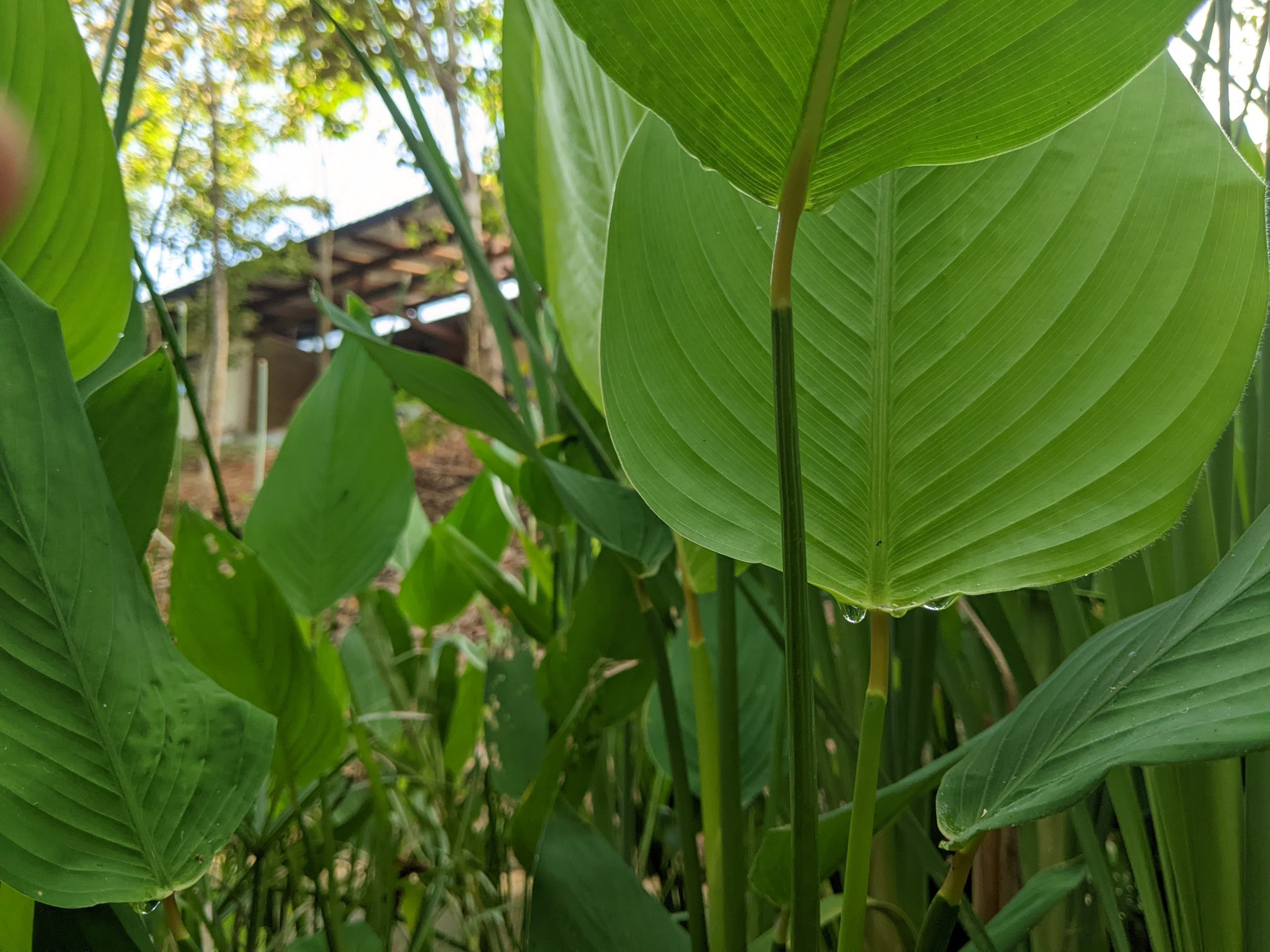
An Artificial Wetland
“Eco-technological and biological, designed to imitate the processes of natural wetland ecosystems, they stand out as a potential alternative or as a supplementary system for wastewater treatment.”
United Nations Human Settlements Programme (UN-HABITAT), 2008
It is a shallow pool, filled with substrate and planted with aquatic vegetation resistant to water saturation. Wastewater enters the pool and flows through the substrate and the roots of the plants, and is discharged at the outlet into an inspection chamber, where you can also regulate the water depth inside the wetland.
The water that exits at the end of the wetland can be reused for irrigation in the garden, which is great because in Panama there are four months each year without rain. During that time, being able to water your plants without using potable water — which we need to take care of — is ideal. Soon we will be installing a rainwater harvesting system, which is also something I recommend, and something I wish I had done from the beginning in my house, but that’s how we learn. The positive side is that you can always modify and add it later.
My system
The system we have consists of a biodigester (similar to a septic tank but with additional ecological factors) as primary treatment, and then the water flows into our artificial wetland.
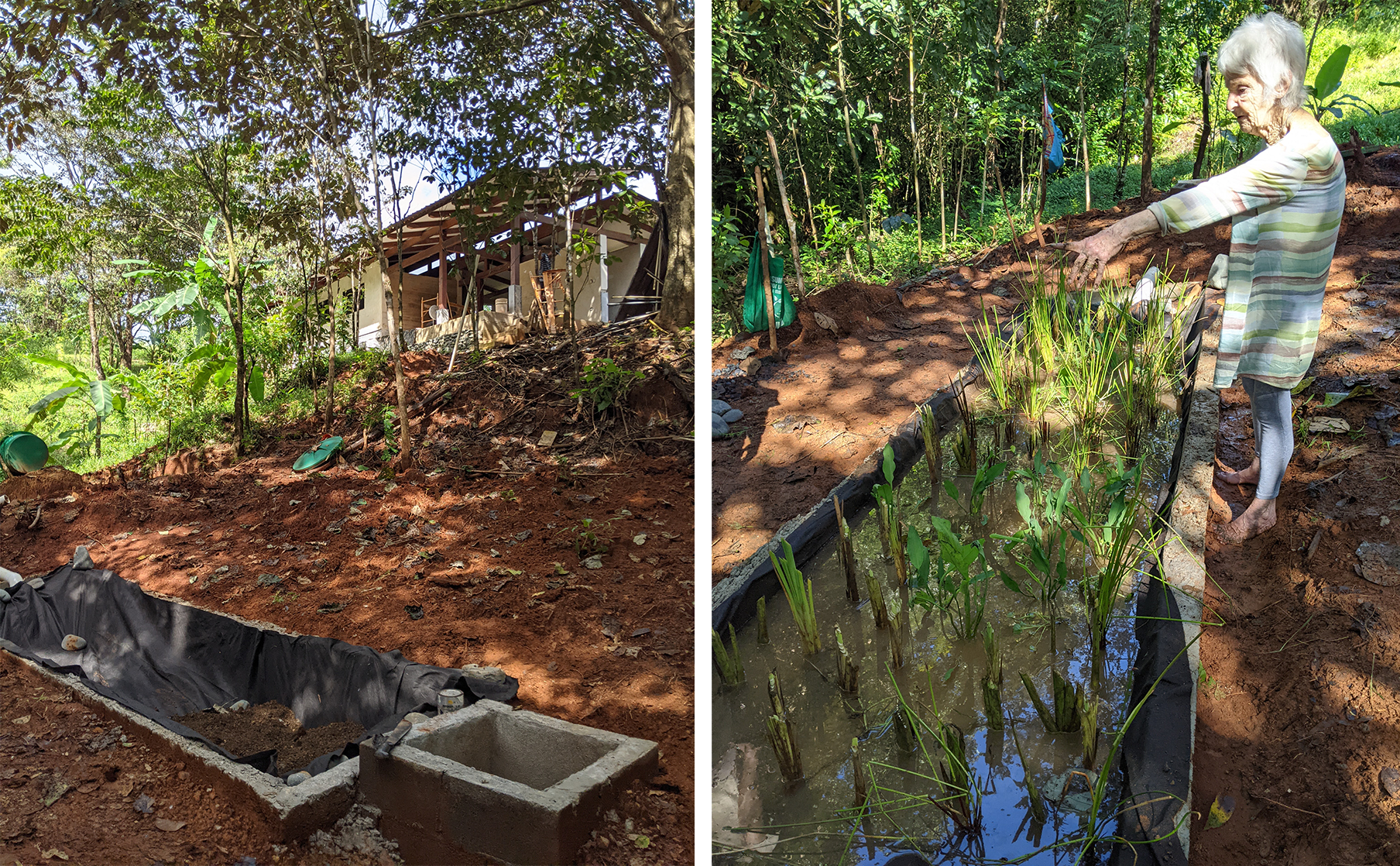
Our wetland is a rectangular-shaped pool with a relatively shallow depth. The dimensions and system were designed by engineer Andoni Iriberri from Aparato A. This is necessary to determine the size of wetland you need and how many plants should be planted for proper functioning.
The pool has a layer of gravel at the bottom, then a geotextile covering the base, and is filled with a substrate made of natural compost mixed with coarse and fine sand. We planted aquatic vegetation found in natural wetlands in the area.
From the beginning to today — the stabilization process
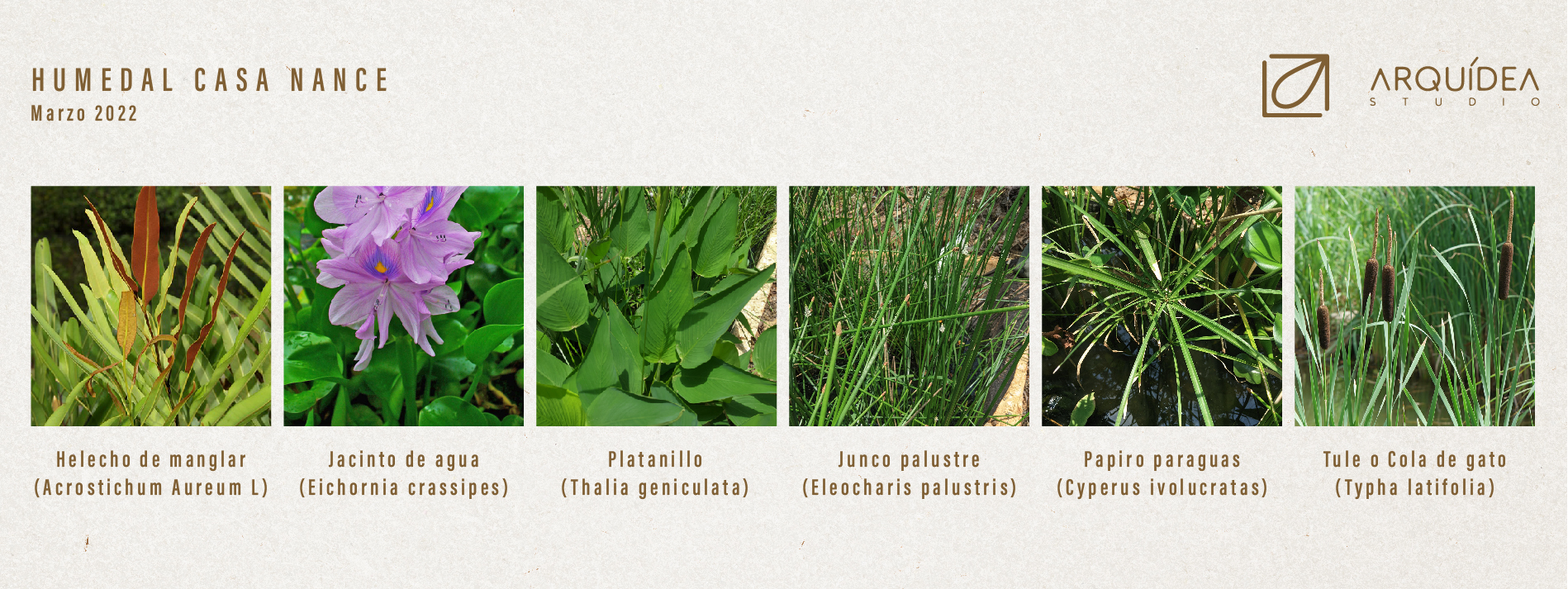
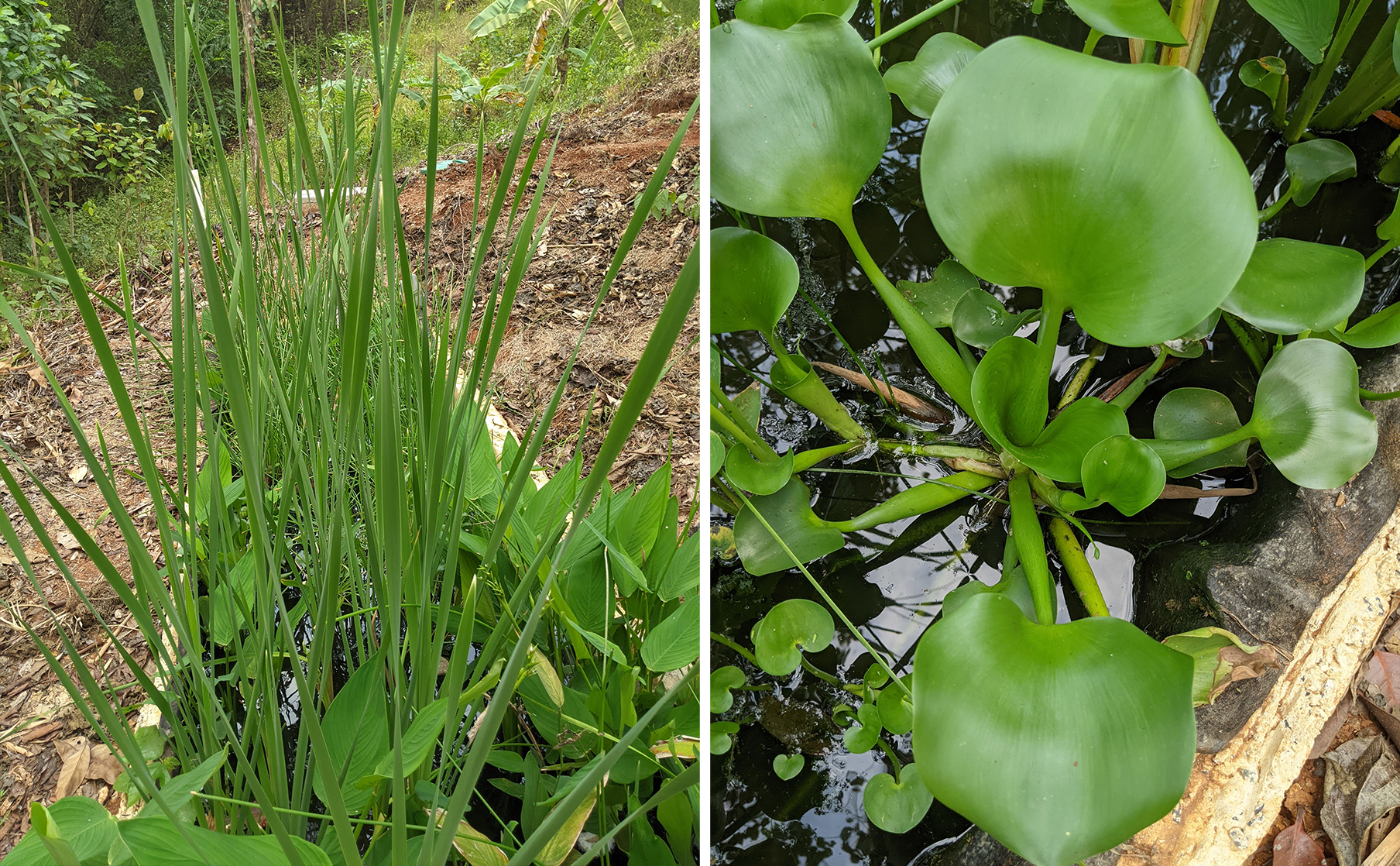
Once the pool was built, with its layers in place and the substrate added, aquatic plants were collected from natural wetlands in the area. They need to be plants with strong roots and/or rhizomes, since the roots are what work to clean the water. We then planted them with the help of Jenny and Bruce, neighbors with enormous hearts who wanted to help. Something very valuable about the place where I live is how much the community helps one another, especially when it’s time to get hands in the soil. After planting, we opened the water and let it fill to the desired level.
When the wetland started, it became populated with mosquito larvae — thousands of them — and many tadpoles, which later grew into frogs, and we had a festival every night with the little frogs (Túngaras). The mosquitoes apparently never grew to adulthood and were all eaten, because they never bothered us in the house. We also introduced some small fish that my neighbor Ray gave me, and to this day they have their little family at the cleanest end of the wetland. They are tiny, in different colors, and very beautiful.
Three months have passed. The wetland is full of life, the plants are thriving and reproducing, and there is still more progress ahead. Every day I see new species of insects and a great deal of diversity. I have been introducing more plants where some didn’t take, and also cleaning dry leaves that have fallen. I’ve been told it takes about four months to stabilize, and I hope that’s the case, because at night, when the air cools down, sometimes there is an aroma of wastewater.
I think the main issue with this wetland — and perhaps a “con” we can observe — is the number of little frogs singing at night. It’s beautiful to listen to them, but living with them every day can be a bit difficult, especially when it’s time to go to sleep. They keep the party going until around midnight. We’ll give it some time for everything to stabilize, for the rainy months to arrive, and then evaluate the next steps. One possible solution would be to raise the water level so the substrate and the water are at the same height. Right now there are about two inches of standing water.
I shared a reel on my Instagram where you can see the wetland in video.
I hope you enjoyed this, and let me know if this is something you’d consider doing in your own homes. In a few months I’ll share a follow-up post.

Update — 2026
A few years later, I wanted to share an update on how the wetland is performing today.
The singing frogs are no longer an issue. A couple of years ago, following a recommendation from the district health inspector who visited, we topped off the wetland with an additional layer of sand. This helped reduce the open water surface and improved the overall balance of the system.
We also adjusted the planting strategy. Today, the wetland includes local Dieffenbachia that naturally grow in nearby creeks, along with papyrus. Both have deep root systems and are doing very well. The plants are thriving, and the wetland feels more stable and integrated into the landscape.
Over time, the system has matured, requiring very little maintenance while continuing to function as intended. It has become a quiet, living part of the garden — still full of life, but much more balanced than in the early months.
Comments